
Syllabus
What Olympiads covers
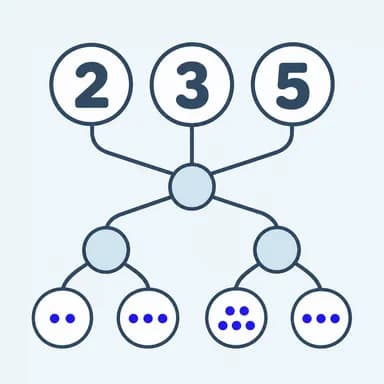
Number Theory
- Modular arithmetic and the Chinese Remainder Theorem
- Orders and primitive roots
- Diophantine equations
- p-adic valuation and infinite descent
Combinatorics
- Advanced counting and bijections
- The pigeonhole principle in extremal problems
- Combinatorial game theory and graph theory basics
- Invariants and monovariants
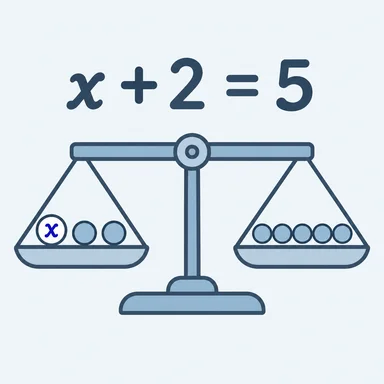
Algebra and Inequalities
- Functional equations
- Polynomial theory: irreducibility and roots
- Classical inequalities: AM-GM, Cauchy-Schwarz, Schur, rearrangement
- Advanced sequences and recursions
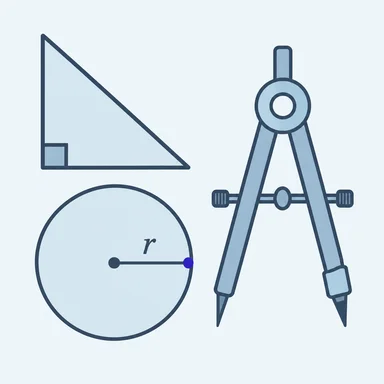
Geometry
- Synthetic proof techniques and advanced circle theorems
- Radical axis and power of a point
- Trigonometric identities in geometric proofs
- Barycentric and complex-number geometric techniques
Study Notes
Olympiads notes from our tutors
Olympiad Mathematics
6 sections · 0 notes
- Writing a Mathematical Proof · Locked, notes not yet available
- Proof by Contradiction and Induction · Locked, notes not yet available
- Invariants and Monovariants · Locked, notes not yet available
- Extremal Arguments · Locked, notes not yet available
- Proof Techniques Review · Locked, notes not yet available
- Divisibility and Congruences · Locked, notes not yet available
- Diophantine Equations · Locked, notes not yet available
- Orders and Fermat Theorem · Locked, notes not yet available
- Chinese Remainder Theorem · Locked, notes not yet available
- Valuations and Infinite Descent · Locked, notes not yet available
- Number Theory Review · Locked, notes not yet available
- Counting and Bijections · Locked, notes not yet available
- Pigeonhole Principle · Locked, notes not yet available
- Inclusion and Exclusion · Locked, notes not yet available
- Graph Theory and Combinatorial Games · Locked, notes not yet available
- Combinatorics Review · Locked, notes not yet available
- Polynomial Identities and Roots · Locked, notes not yet available
- Functional Equations · Locked, notes not yet available
- Classical Inequalities · Locked, notes not yet available
- Sequences and Recurrences · Locked, notes not yet available
- Algebra and Inequalities Review · Locked, notes not yet available
- Triangle and Circle Geometry · Locked, notes not yet available
- Power of a Point and Radical Axes · Locked, notes not yet available
- Geometric Transformations · Locked, notes not yet available
- Trigonometric Proofs · Locked, notes not yet available
- Coordinate and Complex Methods · Locked, notes not yet available
- Geometry Review · Locked, notes not yet available
- AIME Style Problem Solving · Locked, notes not yet available
- Olympiad Proof Problems · Locked, notes not yet available
- Mixed Competition Review · Locked, notes not yet available
Exam Pattern
How Olympiads is assessed
AIME
Integer answers from 0–999, no calculator. Open to top AMC 10 (~2.5%) and AMC 12 (~5%) scorers.
USAMO / USAJMO
Full written proofs, graded 0–7 per problem. USAJMO parallels USAMO for the younger AMC 10 pool.
IMO
The pinnacle of the pathway: each qualifying country sends a 6-student team, selected via USAMO and the MOP training camp.
Required Materials
What you'll need
AoPS Intermediate & Olympiad texts
Intermediate Algebra, Intermediate Counting & Probability and Precalculus bridge AMC-level skills to olympiad technique.
Engel's Problem-Solving Strategies
A widely used olympiad training reference covering the core proof techniques above.
Past USAMO/USAJMO/IMO papers
Freely published official archives, the standard for realistic proof-based practice.
Try It Yourself
Sample questions, solved step by step
Scroll into view to watch each solution build itself, one step at a time, exactly how our tutors walk students through it.
Sample question
Find the remainder when 7¹⁰⁰ is divided by 13.
Animated solution
Apply Fermat's Little Theorem
13 is prime and gcd(7, 13) = 1, so 7¹² ≡ 1 (mod 13)
Reduce the exponent
100 = 8 × 12 + 4, so 7¹⁰⁰ ≡ 7⁴ (mod 13)
Compute 7² mod 13
7² = 49 ≡ 49 − 39 = 10 (mod 13)
Compute 7⁴ mod 13
7⁴ = (7²)² ≡ 10² = 100 ≡ 100 − 91 = 9 (mod 13)
Answer: 9
Sample question
Prove that for all real numbers a, b, c: (a + b + c)² ≥ 3(ab + bc + ca).
Animated solution
Expand the left side
(a + b + c)² = a² + b² + c² + 2(ab + bc + ca)
Simplify the inequality
The claim reduces to a² + b² + c² ≥ ab + bc + ca
Rewrite as a sum of squares
2a² + 2b² + 2c² − 2ab − 2bc − 2ca = (a−b)² + (b−c)² + (c−a)² ≥ 0
Conclude
Since a sum of squares is always ≥ 0, the original inequality holds, with equality iff a = b = c
Answer: Proven: equality holds when a = b = c