
Syllabus
What IB MYP covers
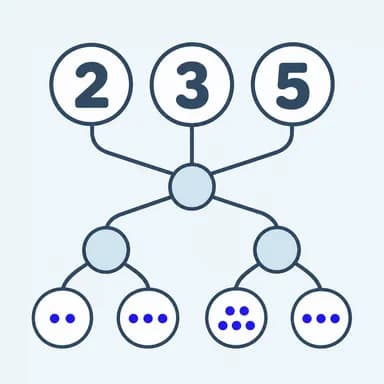
Number
- Integers, fractions, decimals and standard form
- Ratio and percentage
- Indices, including fractional and negative exponents (Extended)
- Estimation and rounding
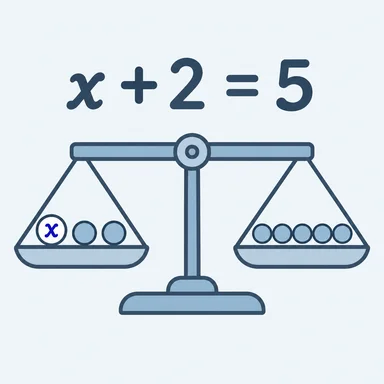
Algebra
- Expressions, equations and inequalities
- Sequences and formulae
- Simultaneous equations
- Graphing linear and quadratic functions
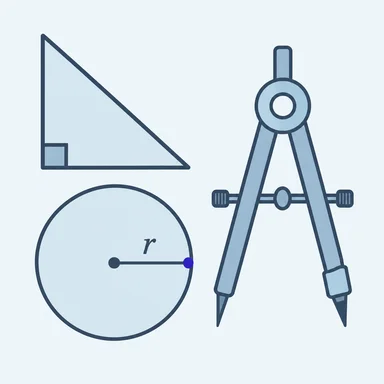
Geometry and Trigonometry
- 2D and 3D shape properties and angle rules
- Pythagoras' theorem and coordinate geometry
- Transformations
- Basic trig ratios, extending to circle theorems and vectors (Extended)
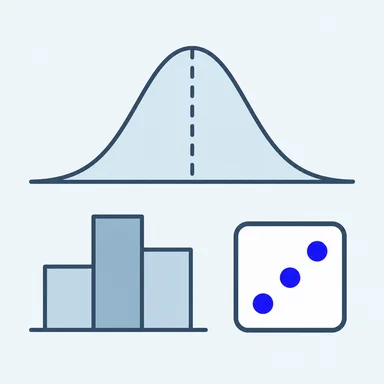
Statistics and Probability
- Data collection and representation
- Measures of central tendency and spread
- Single and combined probability (Venn and tree diagrams)
- Scatter graphs and correlation
Study Notes
IB MYP notes from our tutors
IB MYP Mathematics
6 sections · 0 notes
- Integers Fractions and Decimals · Locked, notes not yet available
- Ratios Rates and Percentages · Locked, notes not yet available
- Powers Roots and Standard Form · Locked, notes not yet available
- Accuracy and Estimation · Locked, notes not yet available
- Number Review · Locked, notes not yet available
- Algebraic Expressions and Expansion · Locked, notes not yet available
- Linear Equations and Inequalities · Locked, notes not yet available
- Patterns and Sequences · Locked, notes not yet available
- Linear Functions and Graphs · Locked, notes not yet available
- Simultaneous Equations · Locked, notes not yet available
- Algebra Review · Locked, notes not yet available
- Quadratic Expressions and Equations · Locked, notes not yet available
- Quadratic Graphs · Locked, notes not yet available
- Exponential Relationships · Locked, notes not yet available
- Algebraic Fractions · Locked, notes not yet available
- Extended Algebra Review · Locked, notes not yet available
- Angles and Geometric Properties · Locked, notes not yet available
- Congruence Similarity and Scale · Locked, notes not yet available
- Transformations · Locked, notes not yet available
- Area Surface Area and Volume · Locked, notes not yet available
- Pythagoras and Trigonometry · Locked, notes not yet available
- Geometry Review · Locked, notes not yet available
- Data Collection and Displays · Locked, notes not yet available
- Averages and Spread · Locked, notes not yet available
- Scatter Diagrams and Correlation · Locked, notes not yet available
- Probability and Combined Events · Locked, notes not yet available
- Statistics and Probability Review · Locked, notes not yet available
- Investigating Mathematical Patterns · Locked, notes not yet available
- Communicating Mathematical Reasoning · Locked, notes not yet available
- Mathematics in Real Contexts · Locked, notes not yet available
- Mathematical Investigation Review · Locked, notes not yet available
Exam Pattern
How IB MYP is assessed
Criterion A: Knowing and Understanding
Selecting and applying correct mathematics to solve problems in familiar and unfamiliar contexts.
Criterion B: Investigating Patterns
Applying techniques to recognize patterns and justify or verify generalizations.
Criterion C: Communicating
Using correct mathematical notation, language and representation in reasoning and results.
Criterion D: Applying in Real-Life Contexts
Identifying real-world problems, applying suitable maths, and justifying accuracy and conclusions.
Required Materials
What you'll need
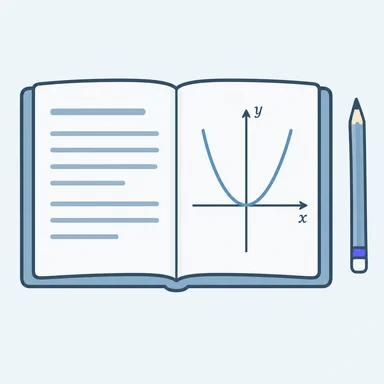
Oxford or Haese MYP Mathematics
The two most widely used MYP textbook series, published in matched Standard and Extended editions per year.
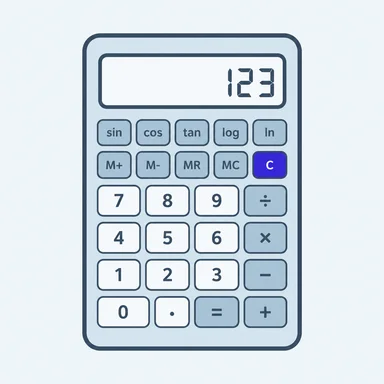
Scientific calculator
A four-function or scientific calculator (e.g. Casio fx-83GTX) covers most years; a graphing calculator is often introduced in Extended Year 5 as DP preparation.
IB criteria rubrics
The official IB command-term and achievement-level descriptors for each of the four criteria, published on ibo.org.
Try It Yourself
Sample questions, solved step by step
Scroll into view to watch each solution build itself, one step at a time, exactly how our tutors walk students through it.
Sample question
A sequence of square-shaped dot patterns is given: Pattern 1 has 1 dot, Pattern 2 has 4 dots, Pattern 3 has 9 dots. Find a general rule for the number of dots in Pattern n, and use it to predict Pattern 6.
Animated solution
List the pattern
1, 4, 9, ...; each value is a perfect square (1², 2², 3²)
Generalize
The number of dots in Pattern n follows dots(n) = n²
Verify against a known term
Pattern 3 → 3² = 9 ✓
Predict Pattern 6
dots(6) = 6² = 36
Answer: 36 dots
Sample question
A school has 60 m of fencing to enclose a rectangular garden against a wall, using the fencing on the other three sides. Find the dimensions that maximize the enclosed area.
Animated solution
Define variables
Let x = length of each of the two sides perpendicular to the wall; y = the side parallel to the wall
Write the fencing constraint
2x + y = 60, so y = 60 − 2x
Write the area function and complete the square
A(x) = x(60 − 2x) = 60x − 2x² = −2(x − 15)² + 450
Read off the maximum
The vertex form shows the maximum occurs at x = 15, giving A = 450
Answer: Width 15 m, length 30 m, maximum area 450 m²