
Syllabus
What GCSE covers
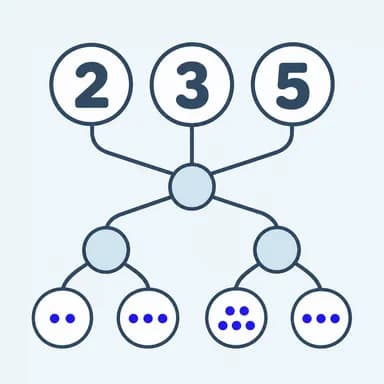
Number
- Place value, fractions, decimals and percentages
- Indices, surds and standard form
- Factors, multiples and primes
- Rounding, estimation and error intervals
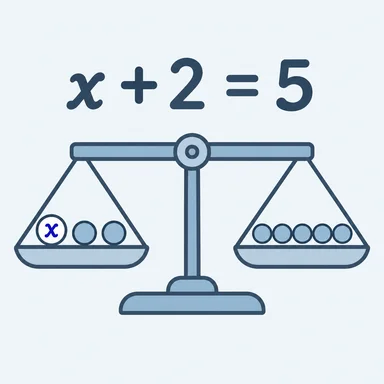
Algebra
- Expanding, factorising and solving linear, quadratic and simultaneous equations
- Inequalities and sequences
- Graphs of linear, quadratic, cubic and reciprocal functions
- Algebraic proof and iteration (Higher)
Ratio, Proportion and Rates of Change
- Direct and inverse proportion
- Percentages, including compound interest and growth/decay
- Compound measures: speed, density and pressure
- Gradients as rates of change
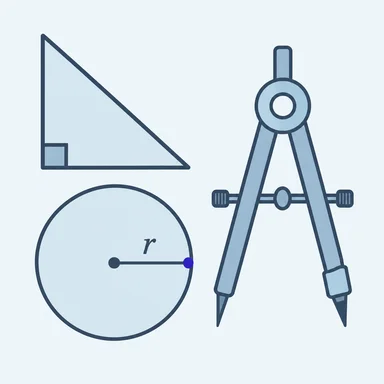
Geometry and Measures
- Angle facts and properties of 2D/3D shapes
- Area, perimeter, volume and surface area
- Pythagoras' theorem and trigonometry (SOHCAHTOA)
- Transformations, constructions, vectors and circle theorems (Higher)
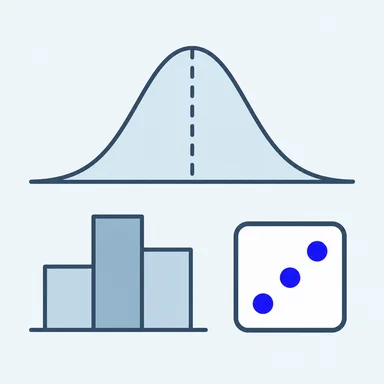
Probability and Statistics
- Sample space diagrams and combined events
- Venn and tree diagrams, including conditional probability (Higher)
- Averages and range from lists, tables and grouped data
- Scatter graphs, cumulative frequency and histograms (Higher)
Study Notes
GCSE notes from our tutors
GCSE Maths
7 sections · 0 notes
- Integers Fractions and Decimals · Locked, notes not yet available
- Powers Roots and Standard Form · Locked, notes not yet available
- Factors Multiples and Primes · Locked, notes not yet available
- Rounding Bounds and Estimation · Locked, notes not yet available
- Number Review · Locked, notes not yet available
- Algebraic Expressions and Formulae · Locked, notes not yet available
- Linear Equations and Inequalities · Locked, notes not yet available
- Sequences · Locked, notes not yet available
- Linear Graphs and Simultaneous Equations · Locked, notes not yet available
- Quadratic Expressions and Equations · Locked, notes not yet available
- Algebra Review · Locked, notes not yet available
- Algebraic Fractions and Surds · Locked, notes not yet available
- Functions and Graph Transformations · Locked, notes not yet available
- Nonlinear Simultaneous Equations · Locked, notes not yet available
- Iteration · Locked, notes not yet available
- Higher Algebra Review · Locked, notes not yet available
- Ratios and Proportion · Locked, notes not yet available
- Percentages and Repeated Change · Locked, notes not yet available
- Rates and Compound Measures · Locked, notes not yet available
- Proportional Graphs · Locked, notes not yet available
- Ratio and Rates Review · Locked, notes not yet available
- Angles Polygons and Constructions · Locked, notes not yet available
- Congruence Similarity and Transformations · Locked, notes not yet available
- Perimeter Area and Volume · Locked, notes not yet available
- Pythagoras and Right Triangle Trigonometry · Locked, notes not yet available
- Geometry Review · Locked, notes not yet available
- Circle Theorems · Locked, notes not yet available
- Sine and Cosine Rules · Locked, notes not yet available
- Vectors and Geometric Proof · Locked, notes not yet available
- Higher Geometry Review · Locked, notes not yet available
- Data Collection and Statistical Diagrams · Locked, notes not yet available
- Averages and Spread · Locked, notes not yet available
- Scatter Diagrams and Correlation · Locked, notes not yet available
- Probability Trees and Venn Diagrams · Locked, notes not yet available
- Statistics and Probability Review · Locked, notes not yet available
Exam Pattern
How GCSE is assessed
Paper 1
Non-calculator paper, drawing from any topic in the specification.
Paper 2
Calculator paper.
Paper 3
Calculator paper; questions increase in demand across all three papers, from short recall to multi-step problem solving.
Required Materials
What you'll need
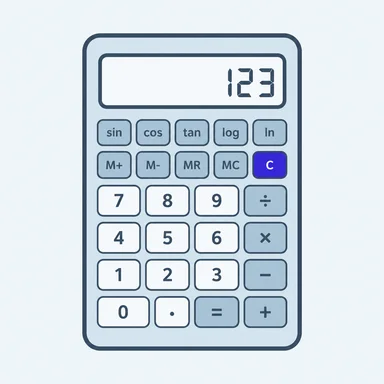
Scientific calculator
The Casio fx-83GTX/fx-85GTX CW (or equivalent) is the standard recommended model for both AQA and Edexcel.
Official formula sheet
Provided in the exam. The Higher sheet adds the quadratic formula, sine/cosine rules and the ½ab sin C area formula; everything else must be memorised.
Past and specimen papers
Freely available from aqa.org.uk and the Pearson Edexcel qualifications site, the single best way to get used to question style.
Try It Yourself
Sample questions, solved step by step
Scroll into view to watch each solution build itself, one step at a time, exactly how our tutors walk students through it.
Sample question
A jacket normally costs £80. In a sale, the price is reduced by 15%. What is the sale price?
Animated solution
Find 10% of £80
10% of 80 = £8
Find 5% of £80
5% of 80 = £4
Add to get 15%
15% = 8 + 4 = £12
Subtract the discount
£80 − £12 = £68
Answer: £68
Sample question
A, B and C are points on a circle with centre O. Angle AOC (at the centre) = 130°. Find angle ABC, the angle at the circumference subtended by the same arc AC.
Animated solution
Recall the circle theorem
The angle at the centre is twice the angle at the circumference, when subtended by the same arc
Identify the given angle
Angle AOC (at the centre) = 130°
Apply the theorem
Angle ABC = ½ × 130°
Compute
½ × 130° = 65°
Answer: 65°