
Syllabus
What Common Core covers
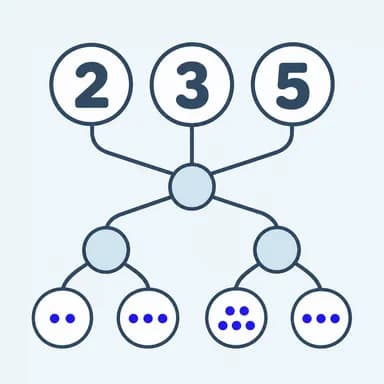
Kindergarten – Grade 5
- Counting and Cardinality (Kindergarten)
- Operations and Algebraic Thinking
- Number and Operations in Base Ten
- Number and Operations: Fractions (Grades 3–5)
- Measurement and Data
- Geometry
Grades 6–8
- Ratios and Proportional Relationships (Grades 6–7)
- The Number System
- Expressions and Equations
- Functions (Grade 8)
- Geometry
- Statistics and Probability
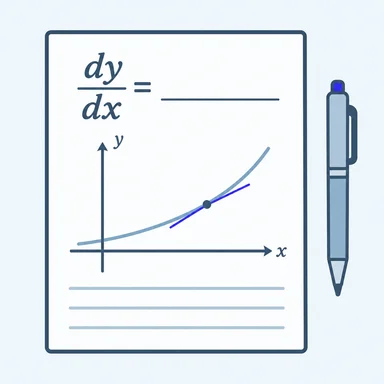
High School
- Number and Quantity: the real and complex number systems, vector and matrix quantities
- Algebra: seeing structure in expressions, creating and solving equations and inequalities
- Functions: interpreting, building and modelling with linear, quadratic and exponential functions
- Geometry: congruence, similarity, circles and geometric measurement
- Statistics and Probability: interpreting data, making inferences and conditional probability
Study Notes
Common Core notes from our tutors
Common Core Math
7 sections · 0 notes
- Multiplication and Division · Locked, notes not yet available
- Fractions and Equivalent Fractions · Locked, notes not yet available
- Decimal Place Value · Locked, notes not yet available
- Fraction and Decimal Operations · Locked, notes not yet available
- Area Volume and Measurement · Locked, notes not yet available
- Elementary Mathematics Review · Locked, notes not yet available
- Ratios Rates and Proportional Relationships · Locked, notes not yet available
- Rational Numbers and Exponents · Locked, notes not yet available
- Expressions Equations and Inequalities · Locked, notes not yet available
- Functions and Linear Relationships · Locked, notes not yet available
- Middle Grades Algebra Review · Locked, notes not yet available
- Scale Drawings and Geometric Measurement · Locked, notes not yet available
- Transformations Congruence and Similarity · Locked, notes not yet available
- The Pythagorean Theorem · Locked, notes not yet available
- Statistical Distributions · Locked, notes not yet available
- Probability Models · Locked, notes not yet available
- Middle Grades Geometry and Data Review · Locked, notes not yet available
- Counting and Place Value · Locked, notes not yet available
- Addition and Subtraction · Locked, notes not yet available
- Comparing and Measuring · Locked, notes not yet available
- Shapes and Spatial Reasoning · Locked, notes not yet available
- Early Number Review · Locked, notes not yet available
- Linear Equations and Systems · Locked, notes not yet available
- Polynomial Expressions and Quadratic Equations · Locked, notes not yet available
- Functions and Modelling · Locked, notes not yet available
- Exponential and Logarithmic Relationships · Locked, notes not yet available
- Algebra and Functions Review · Locked, notes not yet available
- Congruence and Geometric Proof · Locked, notes not yet available
- Similarity and Right Triangle Trigonometry · Locked, notes not yet available
- Circles and Coordinate Geometry · Locked, notes not yet available
- Geometric Measurement and Modelling · Locked, notes not yet available
- Geometry Review · Locked, notes not yet available
- Interpreting Data and Regression · Locked, notes not yet available
- Probability and Conditional Probability · Locked, notes not yet available
- Sampling and Statistical Inference · Locked, notes not yet available
- Statistics and Probability Review · Locked, notes not yet available
Exam Pattern
How Common Core is assessed
State summative assessments
States and consortia (e.g. Smarter Balanced) administer their own Common-Core-aligned tests rather than one shared national exam; format and timing vary by state.
Standards for Mathematical Practice
Eight cross-cutting habits of mind (problem-solving, reasoning, modelling, precision and structure), applied and assessed at every grade level, not tied to one topic.
Required Materials
What you'll need
State-adopted curriculum
Districts choose their own Common-Core-aligned program, e.g. Illustrative Mathematics, Eureka Math/EngageNY, enVision or Big Ideas Math.
Grade-level domain progressions
The official corestandards.org documents mapping how each domain builds year over year, useful for spotting exactly where a gap started.
Try It Yourself
Sample questions, solved step by step
Scroll into view to watch each solution build itself, one step at a time, exactly how our tutors walk students through it.
Sample question
A table gives the points (0, 3), (2, 7) and (4, 11) for a linear relationship. Find the slope and y-intercept, and write the equation.
Animated solution
Compute the slope between two points
Using (0,3) and (2,7): slope = (7 − 3) / (2 − 0) = 4/2 = 2
Verify the slope is constant
Using (2,7) and (4,11): (11 − 7) / (4 − 2) = 4/2 = 2 ✓
Read the y-intercept
At x = 0, y = 3
Write the equation
y = 2x + 3
Answer: y = 2x + 3
Sample question
Solve the system y = x² − 4 and y = x − 2.
Animated solution
Set the expressions equal
x² − 4 = x − 2
Rearrange to standard form
x² − x − 2 = 0
Factor
(x − 2)(x + 1) = 0, so x = 2 or x = −1
Find the y-values
At x = 2, y = 0; at x = −1, y = −3
Answer: (2, 0) and (−1, −3)