
Syllabus
What CBSE covers
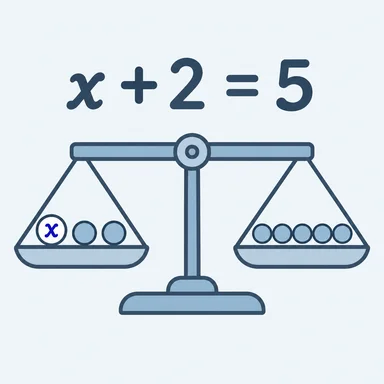
Class 10: 7 Units (80 marks)
- Number Systems: the Fundamental Theorem of Arithmetic and irrationality proofs (6 marks)
- Algebra: polynomials, pairs of linear equations, quadratic equations and arithmetic progressions (20 marks)
- Coordinate Geometry: distance and section formulae (6 marks)
- Geometry: similar triangles and circle tangents (15 marks)
- Trigonometry: trig ratios, identities and heights & distances (12 marks)
- Mensuration: areas of circle sectors and surface area/volume of combined solids (10 marks)
- Statistics & Probability: mean/median/mode of grouped data and classical probability (11 marks)
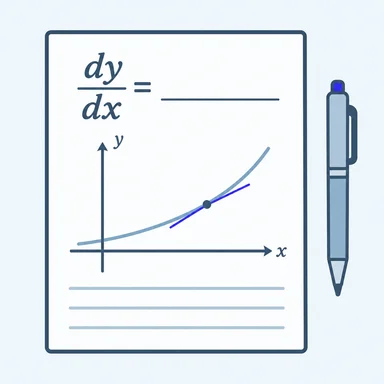
Class 12: 6 Units (80 marks)
- Relations & Functions: types of relations, one-one/onto functions, inverse trig functions (8 marks)
- Algebra: matrices and determinants up to 3×3 (10 marks)
- Calculus: continuity, differentiability, applications of derivatives, integrals and differential equations, the largest unit (35 marks)
- Vectors & 3D Geometry: vector algebra and Cartesian/vector forms of lines (14 marks)
- Linear Programming: the graphical method and feasible regions (5 marks)
- Probability: conditional probability, Bayes' theorem and the total probability theorem (8 marks)
Study Notes
CBSE notes from our tutors
CBSE Mathematics
10 sections · 0 notes
- Number Systems · Locked, notes not yet available
- Polynomials · Locked, notes not yet available
- Linear Equations in Two Variables · Locked, notes not yet available
- Coordinate Geometry · Locked, notes not yet available
- Number and Algebra Review · Locked, notes not yet available
- Lines Angles and Triangles · Locked, notes not yet available
- Quadrilaterals and Circles · Locked, notes not yet available
- Heron Formula · Locked, notes not yet available
- Surface Areas and Volumes · Locked, notes not yet available
- Statistics · Locked, notes not yet available
- Geometry and Data Review · Locked, notes not yet available
- Real Numbers · Locked, notes not yet available
- Polynomials and Their Zeros · Locked, notes not yet available
- Pairs of Linear Equations · Locked, notes not yet available
- Quadratic Equations · Locked, notes not yet available
- Arithmetic Progressions · Locked, notes not yet available
- Algebra Review · Locked, notes not yet available
- Triangles and Similarity · Locked, notes not yet available
- Coordinate Geometry · Locked, notes not yet available
- Introduction to Trigonometry · Locked, notes not yet available
- Applications of Trigonometry · Locked, notes not yet available
- Circles and Areas · Locked, notes not yet available
- Surface Areas and Volumes · Locked, notes not yet available
- Geometry Review · Locked, notes not yet available
- Statistics · Locked, notes not yet available
- Probability · Locked, notes not yet available
- Class 10 Mathematics Review · Locked, notes not yet available
- Sets Relations and Functions · Locked, notes not yet available
- Trigonometric Functions · Locked, notes not yet available
- Complex Numbers and Quadratic Equations · Locked, notes not yet available
- Linear Inequalities · Locked, notes not yet available
- Permutations and Combinations · Locked, notes not yet available
- Binomial Theorem · Locked, notes not yet available
- Sequences and Series · Locked, notes not yet available
- Algebra Review · Locked, notes not yet available
- Straight Lines · Locked, notes not yet available
- Conic Sections · Locked, notes not yet available
- Introduction to Three Dimensional Geometry · Locked, notes not yet available
- Limits and Derivatives · Locked, notes not yet available
- Statistics and Probability · Locked, notes not yet available
- Class 11 Mathematics Review · Locked, notes not yet available
- Relations and Functions · Locked, notes not yet available
- Inverse Trigonometric Functions · Locked, notes not yet available
- Matrices · Locked, notes not yet available
- Determinants · Locked, notes not yet available
- Functions and Algebra Review · Locked, notes not yet available
- Continuity and Differentiability · Locked, notes not yet available
- Applications of Derivatives · Locked, notes not yet available
- Integrals · Locked, notes not yet available
- Applications of Integrals · Locked, notes not yet available
- Differential Equations · Locked, notes not yet available
- Calculus Review · Locked, notes not yet available
- Vector Algebra · Locked, notes not yet available
- Three Dimensional Geometry · Locked, notes not yet available
- Linear Programming · Locked, notes not yet available
- Probability · Locked, notes not yet available
- Class 12 Mathematics Review · Locked, notes not yet available
Exam Pattern
How CBSE is assessed
Section A
20 one-mark objective questions.
Section B
5 short-answer questions.
Section C
6 questions with some internal choice.
Section D
4 multi-step questions with internal choice.
Section E
3 multi-part, case-study based questions.
Internal Assessment
Periodic tests, a portfolio and a lab-practical component, on top of the 80-mark written paper.
Required Materials
What you'll need
NCERT Mathematics Textbook
The prescribed textbook for the relevant class (Class 10, or Part I & II for Class 12), the primary source for board exam questions.
NCERT Exemplar Problems
Higher-order practice questions officially published alongside the textbook, closely mirroring case-study and long-answer question styles.
CBSE Mathematics Laboratory Manual
The official activities and lab-practical guide that feeds the internal assessment component.
Try It Yourself
Sample questions, solved step by step
Scroll into view to watch each solution build itself, one step at a time, exactly how our tutors walk students through it.
Sample question
5 years ago, a father's age was 7 times his son's age. 10 years from now, the father's age will be twice the son's age. Find their present ages.
Animated solution
Define variables
Let the father's present age be F and the son's present age be S
Translate the first condition
F − 5 = 7(S − 5) → F = 7S − 30
Translate the second condition
F + 10 = 2(S + 10) → F = 2S + 10
Solve the system
7S − 30 = 2S + 10 → 5S = 40 → S = 8, then F = 2(8) + 10 = 26
Answer: Father = 26 years, Son = 8 years
Sample question
Bag A has 3 red and 2 black balls. Bag B has 2 red and 3 black balls. A bag is chosen at random and a ball is drawn, and it is red. Find the probability the ball came from Bag A.
Animated solution
Write the prior probabilities
P(Bag A) = P(Bag B) = 1/2
Write the conditional probabilities
P(red | A) = 3/5, P(red | B) = 2/5
Apply the law of total probability
P(red) = (1/2)(3/5) + (1/2)(2/5) = 3/10 + 2/10 = 1/2
Apply Bayes' theorem
P(A | red) = [P(A) × P(red|A)] / P(red) = (3/10) / (1/2) = 3/5
Answer: 3/5 = 0.6