
Syllabus
What ACT covers
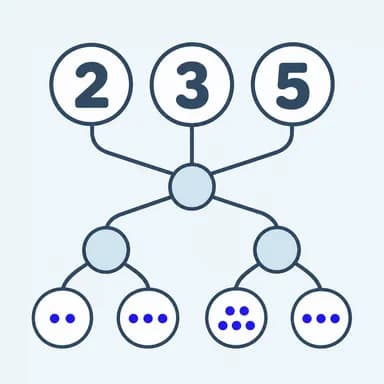
Number and Pre-Algebra Foundations
- Ratios, rates and percentages
- Real number operations and absolute value
- Basic probability and counting
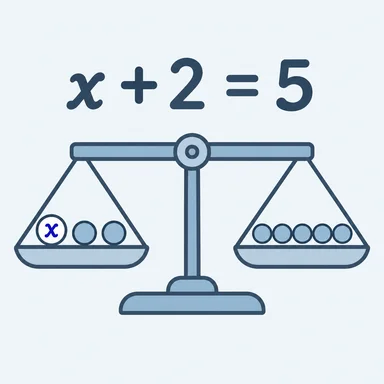
Algebraic Expressions and Equations
- Linear equations and inequalities in one and two variables
- Systems of linear equations
- Quadratic equations: factoring and the quadratic formula
- Exponents and radicals
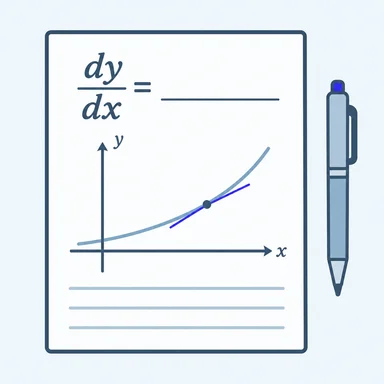
Functions
- Function notation and evaluation
- Linear, quadratic, exponential and polynomial functions
- Domain, range and transformations
- Arithmetic and geometric sequences
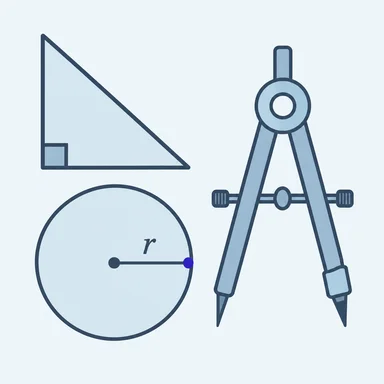
Coordinate and Plane Geometry
- Slope, distance and midpoint on the coordinate plane
- Equations of lines and circles
- Area, perimeter and volume of common shapes
- Properties of triangles, quadrilaterals and polygons
Trigonometry and Statistics
- Right-triangle trig ratios and the unit circle
- Basic trig graphs and identities
- Mean, median, mode and data interpretation
- Basic probability from tables and graphs
Study Notes
ACT notes from our tutors
ACT Math
6 sections · 9 notes
- Linear Equations and Inequalities
- Systems of Linear Equations
- Linear Functions and Coordinate Geometry
- Angles and Triangles · Locked, notes not yet available
- Circles and Coordinate Geometry · Locked, notes not yet available
- Perimeter Area and Volume · Locked, notes not yet available
- Right Triangle Trigonometry · Locked, notes not yet available
- Geometry Review · Locked, notes not yet available
- Function Notation and Transformations · Locked, notes not yet available
- Rational Expressions and Equations · Locked, notes not yet available
- Exponential and Logarithmic Relationships · Locked, notes not yet available
- Sequences and Series · Locked, notes not yet available
- Complex Numbers · Locked, notes not yet available
- Functions and Algebra Review · Locked, notes not yet available
- Data Displays and Summary Statistics · Locked, notes not yet available
- Probability and Counting · Locked, notes not yet available
- Conditional Probability · Locked, notes not yet available
- Statistical Claims and Models · Locked, notes not yet available
- Statistics and Probability Review · Locked, notes not yet available
- Ratios Rates and Unit Conversions · Locked, notes not yet available
- Percentages and Proportional Models · Locked, notes not yet available
- Mixed Problem Solving · Locked, notes not yet available
- ACT Mathematics Review · Locked, notes not yet available
Exam Pattern
How ACT is assessed
Math section
A fixed, non-adaptive test with 4 answer choices per question (reduced from 5 in the pre-2025 format).
Reporting categories
ACT now reports results as Preparing for Higher Math and Integrating Essential Skills rather than the older five-way topic breakdown, weighted toward higher-math content.
Scoring
1–36 per section; the composite now averages English, Math and Reading only, since Science became optional. A separate STEM score averages Math and Science for students who sit Science.
Required Materials
What you'll need
ACT Academy
Free official prep platform from ACT Inc. with practice questions and personalized study plans.
The Official ACT Prep Guide
ACT's own prep book with full-length official practice tests.
Approved calculator
A four-function, scientific or approved graphing calculator (e.g. TI-84 family). CAS calculators such as the TI-Nspire CAS are not permitted.
Try It Yourself
Sample questions, solved step by step
Scroll into view to watch each solution build itself, one step at a time, exactly how our tutors walk students through it.
Sample question
If f(x) = 3x − 5 and g(x) = x² + 1, what is f(g(2))?
Animated solution
Evaluate the inner function first
g(2) = 2² + 1 = 4 + 1 = 5
Substitute into the outer function
f(g(2)) = f(5)
Evaluate f(5)
f(5) = 3(5) − 5 = 15 − 5 = 10
Answer: 10
Sample question
In a right triangle, one angle is 30° and the side opposite that angle has length 5. What is the length of the hypotenuse?
Animated solution
Identify the right relationship
sin(angle) = opposite / hypotenuse, so sin(30°) = 5 / h
Use the known value sin(30°) = 0.5
0.5 = 5 / h
Solve for h
h = 5 / 0.5 = 10
Answer: 10