
Syllabus
What A-Level covers
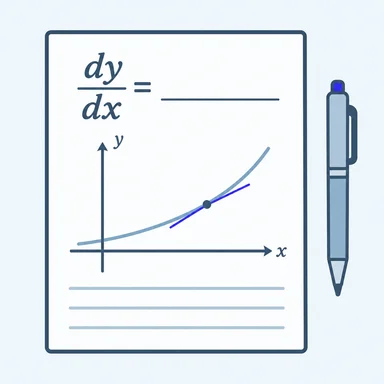
Pure Mathematics
- Proof, including proof by contradiction
- Algebra and functions: surds, quadratics, inequalities, partial fractions
- Coordinate geometry: straight lines and circles
- Sequences and series, including the binomial expansion
- Trigonometry: radians, identities, the sine and cosine rules
- Exponentials, logarithms and growth/decay models
- Differentiation and integration, including implicit differentiation and numerical methods
- Vectors in 2D and 3D
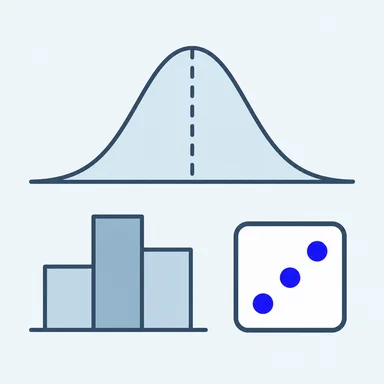
Statistics
- Statistical sampling techniques
- Data presentation and interpretation
- Probability: Venn and tree diagrams
- Statistical distributions: binomial and normal
- Hypothesis testing, correlation and regression, using Pearson's pre-released Large Data Set
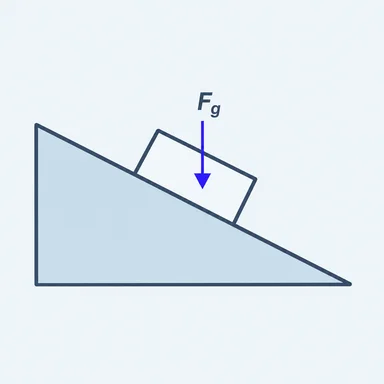
Mechanics
- Quantities and units
- Kinematics: SUVAT equations and calculus-based motion
- Forces and Newton's laws, including friction and connected particles
- Moments
Study Notes
A-Level notes from our tutors
A-Level Maths
8 sections · 0 notes
- Algebraic Manipulation and Surds · Locked, notes not yet available
- Quadratics Equations and Inequalities · Locked, notes not yet available
- Polynomials and the Binomial Expansion · Locked, notes not yet available
- Algebra Review · Locked, notes not yet available
- Functions and Transformations · Locked, notes not yet available
- Exponentials and Logarithms · Locked, notes not yet available
- Sequences and Series · Locked, notes not yet available
- Proof and Mathematical Reasoning · Locked, notes not yet available
- Functions and Sequences Review · Locked, notes not yet available
- Straight Lines and Circles · Locked, notes not yet available
- Trigonometric Functions and Radians · Locked, notes not yet available
- Trigonometric Identities and Equations · Locked, notes not yet available
- Vectors · Locked, notes not yet available
- Coordinate Geometry and Trigonometry Review · Locked, notes not yet available
- Differentiation Rules · Locked, notes not yet available
- Tangents Normals and Optimisation · Locked, notes not yet available
- Integration Methods · Locked, notes not yet available
- Definite Integrals and Area · Locked, notes not yet available
- Differential Equations · Locked, notes not yet available
- Calculus Review · Locked, notes not yet available
- Numerical Solutions of Equations · Locked, notes not yet available
- Numerical Integration · Locked, notes not yet available
- Numerical Methods Review · Locked, notes not yet available
- Sampling and Data Presentation · Locked, notes not yet available
- Probability and Conditional Probability · Locked, notes not yet available
- Binomial and Normal Distributions · Locked, notes not yet available
- Hypothesis Testing · Locked, notes not yet available
- Statistics Review · Locked, notes not yet available
- Kinematics and Motion Graphs · Locked, notes not yet available
- Forces and Newton Laws · Locked, notes not yet available
- Connected Particles and Friction · Locked, notes not yet available
- Moments and Equilibrium · Locked, notes not yet available
- Mechanics Review · Locked, notes not yet available
- Complex Numbers · Locked, notes not yet available
- Matrices and Linear Transformations · Locked, notes not yet available
- Roots of Polynomials · Locked, notes not yet available
- Further Calculus · Locked, notes not yet available
- Further Vectors · Locked, notes not yet available
- Further Mathematics Review · Locked, notes not yet available
Exam Pattern
How A-Level is assessed
Paper 1: Pure Mathematics 1
Draws from any Pure Mathematics topic; calculator permitted (non-CAS).
Paper 2: Pure Mathematics 2
Further Pure Mathematics content; calculator permitted (non-CAS).
Paper 3: Statistics & Mechanics
Section A is Statistics, Section B is Mechanics; students answer every question, no choice.
Required Materials
What you'll need
Scientific or graphical calculator
A non-CAS calculator such as the Casio fx-991EX/fx-991CW ClassWiz is commonly recommended; graphical calculators like the fx-CG50 are permitted but not required.
Official formulae book
Pure, Mechanics and Statistics formulae plus statistical tables, provided in the exam room. Know what is and isn't included.
Pearson Edexcel Large Data Set
Pre-released Met Office weather data that Paper 3 statistics questions are set around; familiarity with its structure is expected.
Try It Yourself
Sample questions, solved step by step
Scroll into view to watch each solution build itself, one step at a time, exactly how our tutors walk students through it.
Sample question
Prove by contradiction that √2 is irrational.
Animated solution
Assume the opposite
Suppose √2 is rational: √2 = a/b for integers a, b sharing no common factor
Square both sides
2 = a²/b² → a² = 2b², so a² is even, which means a itself must be even: a = 2k
Substitute back
(2k)² = 2b² → 4k² = 2b² → b² = 2k², so b² is even, meaning b is also even
Reach a contradiction
a and b were assumed to share no common factor, yet both are even, a contradiction
Answer: √2 is irrational (proof by contradiction)
Sample question
A ball is thrown vertically upward with initial speed 19.6 m/s. Using g = 9.8 m/s², find (a) the time to reach maximum height and (b) the maximum height reached.
Animated solution
Use v = u − gt at maximum height (v = 0)
0 = 19.6 − 9.8t
Solve for t
t = 19.6 / 9.8 = 2 seconds
Use v² = u² − 2gs with v = 0
0 = 19.6² − 2(9.8)s → s = 19.6² / (2 × 9.8)
Compute
19.6² = 384.16, 2 × 9.8 = 19.6, so s = 384.16 / 19.6 = 19.6 m
Answer: t = 2 s, maximum height = 19.6 m